Showing posts with label Interpretation. Show all posts

Monday, October 7, 2013

Time as a State of Mind


Beginning Part I of Paul Virilio’s Open Sky was an eye opener.  Not only because of its difficulty to understand, but once I conquered the language barrier, I learned what Virilio has to say is fairly radical.     

Part I is based on the idea of time and an individual’s time in a specific space.  He dictates the importance (or lack thereof) of near and far, and here and now.  While these spaces of time may have been important previously, Virilio asserts that soon there will be no difference between these spaces. 

For instance, teleportation is not far off when telecommunication (such as conference calls) is a medium of today.  Business executives in Hong Kong can videoconference the chief executive officer of a major corporation in New York City to discuss international trade.  Consequently, the businessman in the United States is in two places at once, as is the foreign trader.  These assumptions erase the present man, and take their position as telepresence and tele-existence.  Can we really be two places at once, even if only via technology?

I believe the most drastic claim Virilio makes is in his last few pages of the section. He states: “Whether we like it or not, for each and every one of us there is now a split in the representation of the World and so in its reality,” (44).  Has our world, specifically how we view the world, changed this drastically?  Virilio believes it has, but what argument does he make for this dramatic division? 

Maybe there is a drastic divide between reality and how we represent reality, but can we go as far to say there are two separate realities?  Virilio thinks we can.  I’m not completely convinced that our means of communication and technology can intermix so far as to create separate realities, but I will be interested to see how the rest of his argument pans out.

He concludes, “We thus find ourselves faced with a sort of great divide in knowing how to be in the world,” a task that may be more difficult than we imagined (25).  We must determine whether we will exist as a civilian or as a nomad on a journey.  For Virilio, it is this decision that determines how we will interpret representations and reality in the future.       

Monday, September 30, 2013

Composition Matters...Or Does it?


Chapter six from Reading Images, written by Gunther Kress and Theo van Leeuwen, discusses “The Meaning of Composition” in images, advertisements, television shows, and other mediums.  Kress and van Leeuween make several convincing arguments regarding the composition of images that we see on a daily basis.  I had never heard of the “rules” they advocate, and after researching a bit I found it difficult to accept their theory.

Kress and van Leeuween argue “a theory of language is no longer sufficient and must be complemented by theories which can make the principles of the new visual literacy explicit” (Kress).  They address their theories with three directives of composition.  According to the authors, “Composition…relates the representational and interactive meanings of the image to each other through three interrelated systems” (Kress):
  1.  Information Value: The location of images associate them with their informational value
  2. Salience: The images must draw the attention of viewers and prove their relevance
  3. Framing: Including or omitting framing devices shows importance to other items nearby

In some mediums with a divide down the middle of the image, the left side of the image is the “given” and the right side is the “new.”  For instance, in this Taylor Swift feature in Seventeen Magazine, the singer is placed on the left side of the page as a familiar face, while the article and new information on the music star are on the right.


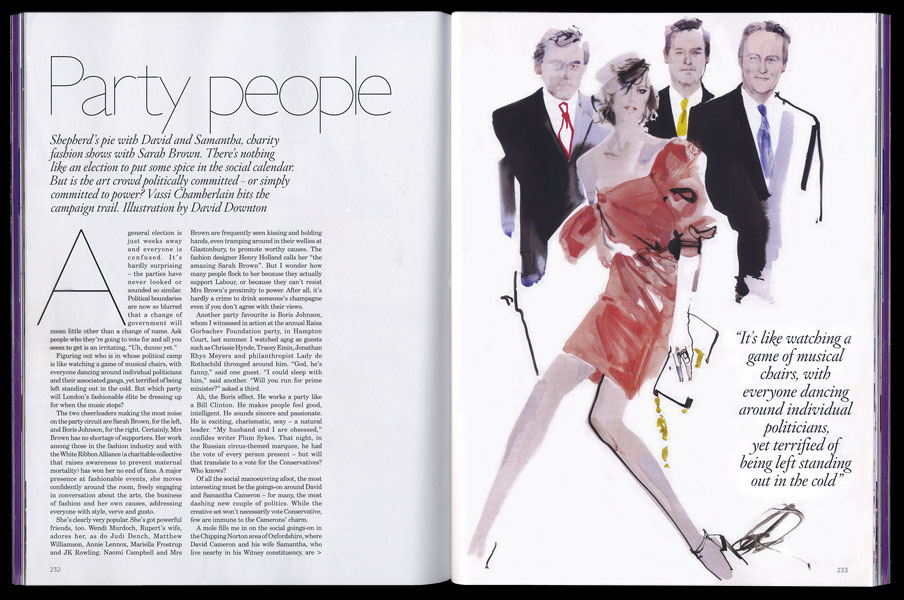
However, there are plenty of popular images that do not fit within the constraints of the authors’ rules.  Oprah, Jay Leno, Jimmy Fallon, anchors on CNN, magazine spreads in Vogue, and the like do not follow this theory.  In fact, I had a more difficult time finding images that did fit into the criteria than those that did not.  Do you think the authors’ theory is followed or merely a suggestion of how images should be compiled?  Are images that do not fit within the constraints of the theory as aesthetically pleasing to you as images that do? See below examples that defy the theory set out by Kress and van Leeuwen.
 
Vogue Magazine spread


Nike advertisement